

Menopause & Perimenopause Treatment
Menopause and Perimenopause Treatment in Ocala
From the first changes to after your last period
Yes, you can get menopause and perimenopause treatment in Ocala at Padgett Medical Center. Visits look at hot flashes and night sweats, sleep, mood and vaginal symptoms, with lab testing first and a plan built from the results. Sarah Weir, APRN, sees you at the clinic or by telehealth statewide.
Which of these sound familiar?
Tap anything you have noticed over the last few months.
Start Your Program From Home
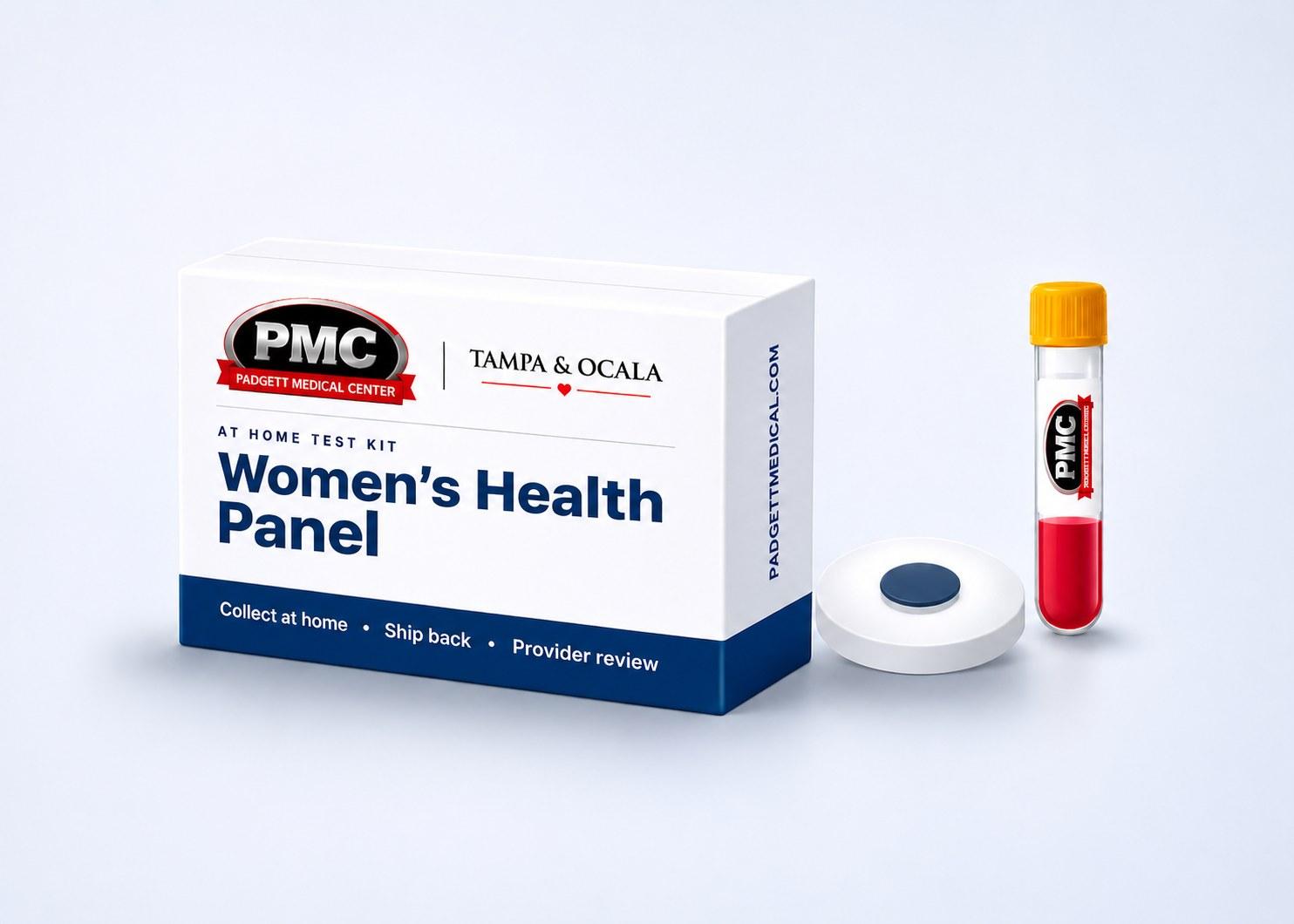
Order your lab panel online and do your bloodwork at home. A simple device on your upper arm collects your sample in minutes. No needle draw, no finger-prick, no waiting room. Once we have your results, your visit can be from home too, so you can start your menopause treatment without leaving home.
- 1
Order your panel online. Pick the panel for your program and check out in a few minutes. Ordering online saves 10%.
- 2
Collect at home. Place the device on your upper arm, press the button, and your sample is collected in minutes.
- 3
Your visit, from home. Once we have your results, go over them with a Padgett provider by telehealth, with medication shipped to your door in Florida.
Prefer to come in? Visit us at 200 SW 8th St A, Ocala, FL 34471.
Recommended lab panels
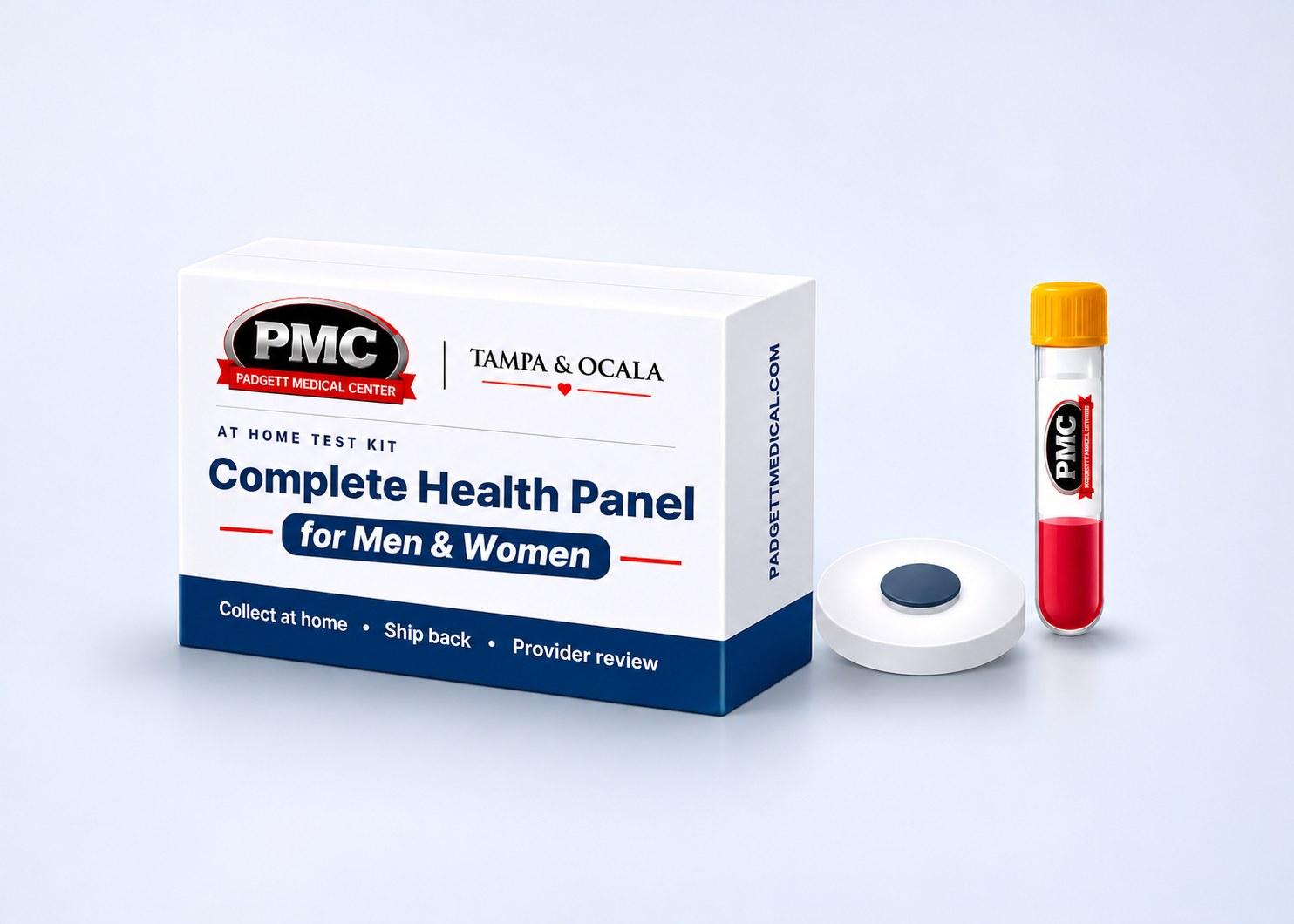
- Complete Health Panel for Men or Women
47 tests · The most complete picture, men or women
$467.10$519.00
Perimenopause, menopause or postmenopause: which stage are you in?
Menopause is a single point in time: 12 months in a row without a period. Perimenopause is the stretch before it, when estrogen and progesterone start to swing and periods come less often, and it can begin several years before your last period. Postmenopause is every year after that. Menopause usually arrives between ages 45 and 55, and hot flashes and sleep trouble can start during perimenopause, before periods stop.
Educational, not medical advice. Your provider works out your stage from your history and your periods, and from labs when they help.
What can treatment involve for each symptom?
Plans start with the symptoms that bother you most. This is what the options look like, drawn from FDA labeling and The Menopause Society.

Hot flashes and night sweats

Broken sleep

Mood changes

Vaginal dryness and painful sex

Bone health

Early or surgical menopause
When should you start?
Timing matters. Updated FDA labels for systemic hormone therapy now advise considering a start before age 60 or within 10 years of menopause, the window in which The Menopause Society finds the benefits outweigh the risks for women with bothersome hot flashes and no reason to avoid hormones.

Is menopause hormone therapy safe?
For healthy women under 60 or within 10 years of menopause, The Menopause Society describes the added risks as rare. In November 2025, FDA asked makers to drop cardiovascular disease, breast cancer and probable dementia from the boxed warning, and it approved the first updated labels in February 2026. Risks of blood clots, stroke and breast cancer are still in the labels' warnings, and systemic estrogen used alone keeps a boxed warning for uterine cancer in women who have a uterus.
- A progestogen alongside estrogen if you have a uterus
- Any unexplained bleeding checked promptly
- Breast exams and mammograms kept up to date
- Periodic check-ins on whether to continue
What do the first months look like?
A common path. Your own timing may differ.
Your story so far
Sarah Weir, APRN, asks when your periods changed, which symptoms bother you most, and about your health and family history, then orders lab testing.
Options for your stage
Your provider explains which approaches fit your stage, symptoms, history and labs, and what the plan would cost.
Give it time, and speak up
The Menopause Society notes that lower doses can take 6 to 8 weeks to ease hot flashes enough, so a new plan needs time. Report bleeding, breast tenderness or headaches.
Keep, change or stop
Follow-up visits check how you are doing, and any change, including stopping, is decided with your provider rather than on your own.
Your cost follows the treatment your symptoms, stage and labs point to, so it is explained after your results rather than quoted up front.
- Explained after your labs, not guessed at
- Visits in Ocala or by telehealth in Florida
- No long-term commitment
Menopause and hormone therapy near you
Menopause and perimenopause questions
How do I know if I am in perimenopause?+
Often the first thing you notice is that your periods change, coming more or less often. Hot flashes and sleep problems can begin during this stage too. Menopause is confirmed once you have gone 12 months in a row with no period. Your provider confirms where you are from your history and symptoms, using labs when they add something.
Can I get treatment before my periods stop?+
Yes. You do not have to wait for your last period to get help, since symptoms such as hot flashes and poor sleep can begin in perimenopause, while you still have periods. Which treatment fits while you still have periods depends on your cycles, symptoms, health history and labs, and your provider goes over the choices with you.
When should I start menopause hormone therapy?+
Timing changes the balance of benefits and risks. For women under 60, or within 10 years of their last period, with bothersome symptoms and no reason to avoid hormones, The Menopause Society judges that balance favorable. Starting after 60 is not ruled out, but it calls for a closer look at your own risks.
Did FDA remove the black box warning from menopause hormone therapy?+
Partly. In November 2025, FDA asked companies to remove cardiovascular disease, breast cancer and probable dementia from the boxed warning, and in February 2026 it approved updated labels for six products. The boxed warning on uterine cancer stays for systemic estrogen used alone, and heart and breast cancer risks remain in the warnings section.
What helps vaginal dryness after menopause?+
Over-the-counter vaginal moisturizers and lubricants are the first step. If they are not enough, The Menopause Society recommends low-dose vaginal estrogen, such as a cream, tablet, insert or ring, which keeps absorption into the blood minimal. Vaginal DHEA and an oral medicine called ospemifene are FDA-approved non-estrogen alternatives for painful sex.
Can hormone therapy help with sleep and mood?+
It can help sleep when night sweats are what wake you, by reducing nighttime awakenings, according to The Menopause Society. Mood is less clear-cut: estrogen may ease depressive symptoms during perimenopause but is not an effective treatment for depression after menopause. Your provider asks about both and talks through other options.
What if I can't or don't want to take hormones?+
You still have options. FDA has approved three non-hormone therapies for women who cannot or choose not to take hormones. The Menopause Society's 2023 statement also supports cognitive behavioral therapy and clinical hypnosis for hot flashes, and it does not recommend herbal supplements for them. Your provider can go over what fits.
How long can I stay on hormone therapy?+
There is no set cutoff. The Menopause Society says hormone therapy does not need to be stopped routinely at 60 or 65, and the choice to continue should be reviewed periodically. About half of women who stop see their hot flashes come back, so plan any change with your provider.
Can I get menopause treatment by telehealth in Florida?+
Yes. Sarah Weir, APRN, can see you by telehealth wherever you live in Florida, so long as you are inside the state when the appointment happens. Prefer to come in? The clinic is on SW 8th Street, just south of downtown Ocala. Either way, lab testing is still the first step.
Is it normal to have hot flashes for years?+
Yes, for many women. The Menopause Society's 2023 statement says hot flashes and night sweats last 7 to 9 years on average and more than 10 years for about a third of women. They affect up to 80 percent of women at menopause, so lasting symptoms are common and worth raising with your provider.
Free consultation, zero pressure
Take the first step toward feeling your best
Run through a few quick questions and reserve your free consultation, in person in Ocala or by telehealth anywhere in Florida. Most visits land on the same or next business day.
- Your goals reviewed by a real provider
- A plan made for you, never cookie-cutter
- Visit us in Ocala or go telehealth statewide
- A warm, judgment-free team